
So… I’ve been building film summary fact-checkers for about ten months now. I like this area because unlike a lot of assessment of fact-checking we can essentially go and “roll back the tape” to get the truth of what happened, which is something you can’t always do with news events, etc.
My current mini-project is about summary. I’m looking at whether AI summary introduces errors into text, what sort of errors it introduces, and how those errors are similar or different from human errors. To do this I take a film summary from AFI or Wikipedia, then have ChatGPT condense it at 50%, 30%, 20%, and 10%. I then measure errors introduced by summary, not only in relation to the original summary but to the film itself.
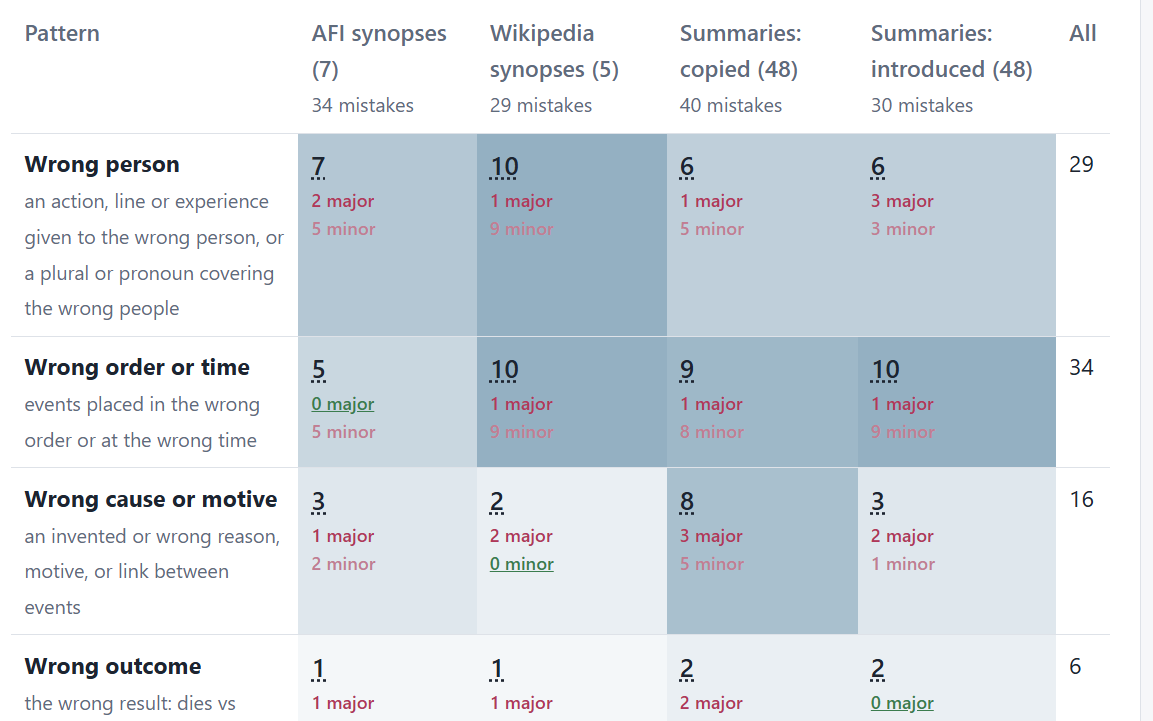
To do that I need to fact-check the original synopsis against the film as well as the condensed summaries. I used all my old tricks for agentic fact-checking but in this case since there was a film in the public domain uploaded in full on Internet Archive I had it look at the film itself too, by having the agent stream it.
And, uh, it worked!
The agent streams the public domain film, makes contact sheets, pairs that with transcribed dialogue from the audio stream it processes, and fact-checks relevant portions of the film summary. I still need to see how well it did all that (may have to pay my daughter to check that for me, it will be laborious). But at a scan it looks like it not only did well at confirming facts but identified a couple summary errors using this process.
Right now this is an expensive process only used for claims that seem to have no searchable evidence online. But it’s real.
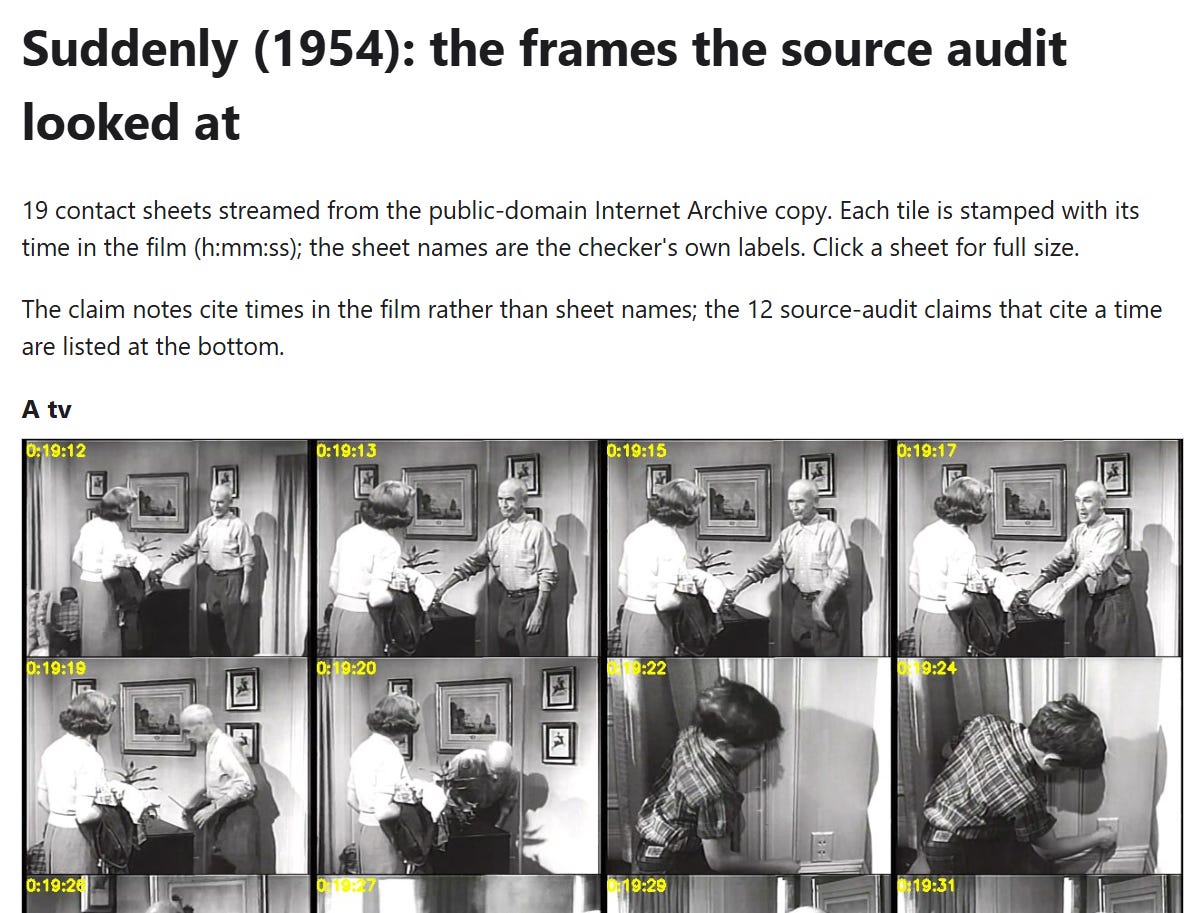
In this case we are figuring out whether a described sequence of events is correct.
You can see the full contact sheets and the claims they adjudicate here. (Please click that link and scroll all the way to the bottom, it’s wild. I’ve been in this fact-checking business for 16 years, and it is wild). The process also took the audio and created a full reference script.
Wasn’t there a prediction by someone that LLMs wouldn’t be able to watch a film and adequately explain it by 2030? The idea being this was absurd? We are not there yet (we really aren’t, and I can explain in detail why). But we are headed there, I think well before 2030.
An example of a claim from Wikipedia, that Ellen picks up the revolver off the dresser to shoot Sinatra:

Frames pulled to adjudicate it. The agent looks up the film on Internet Archive, streams it, and creates a contact sheet and collates it with a timestamped audio transcript. It uses the transcript to figure out where in the film the scene falls, and grabs that scene.
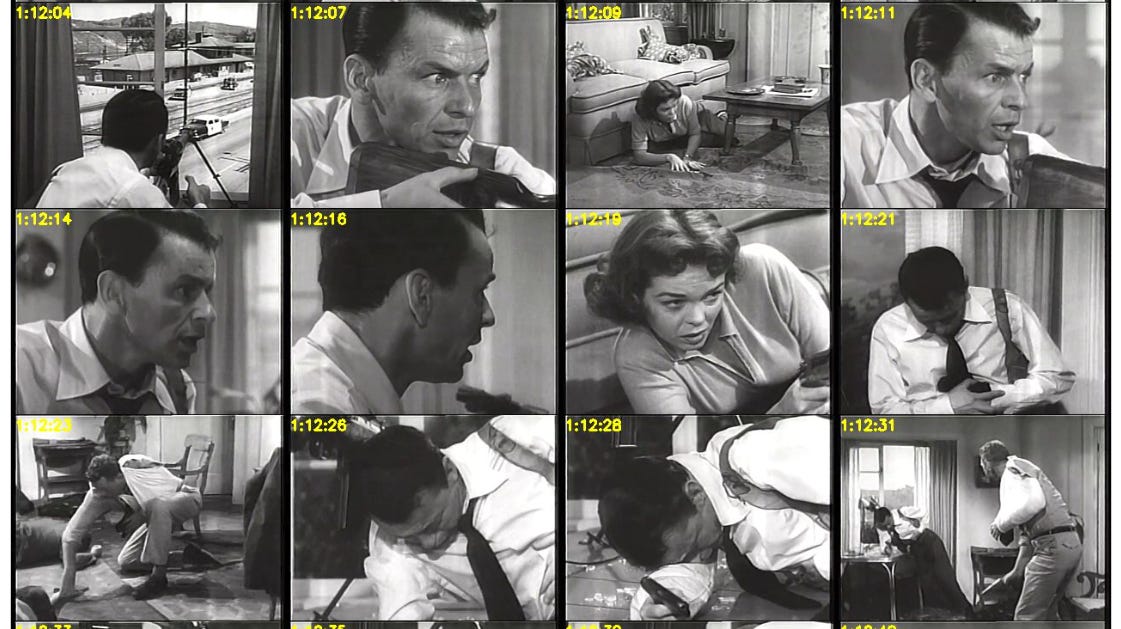
It then resolves the claim: Wikipedia is wrong, the gun is picked up off the floor, not the dresser:

In this case it also benefits from search, and might be benefitting from seeing that a non-Wikipedia source disagrees with Wikipedia, which lets it know that that is a place to spend the extra verification effort. It is not watching the full film and comparing it, I do not have that kind of cash. But the resolution of this specific claim is literally “going to the tape”.
I saw someone vibe coded a live fact checking app for politics, but haven't had time to dig into it. Certainly could be an interesting use cause for some of the newish probability models. I had to dig to find this: https://pantsonfire.cc/
You are right - this IS wild. Seeing the beginnings of the method here - timestamped stills, transcription, it's hard to imagine that we could think LLMs *wouldn't* be able to view and explain a film. What do you imagine is missing from the current process?